Nearly 44% of American counties have no pediatrician at all. That's nearly 4 million kids with zero access. And when trusted medical voices aren't available, misinformation can fill the void — let's give parents a different option.
He's not a chatbot. He's a voice-activated conversation parents can have about any clinical topic. His answers have zero hallucination and more charm than a white paper can dream of. He's a kind, human voice that enables parents to easily access the best pediatric science in the world.
Because AI and healthcare is a story being written, and rewritten, in real time — it wouldn't be wise to proceed with this idea without fallback options. See four variations here, as well as plans for multicultural options →
The American Academy of Pediatrics spent decades creating the best clinical guidance in the world — via the AAP website and their consumer-facing site healthychildren.org. We can turn that into a library searchable by meaning, not keywords. Additionally, every answer is indexed back to its source; so everything Dr. Cliff says is organically AAP approved.
The first pass makes sure only AAP-approved content is served — the second adds the charm and humanity of Dr. Cliff. This is how we fill the trust gap and give worried parents a better resource than social media to find answers.
Orchestration? Caching? Failover? Diagram meant to show feasibility; obviously this is not the work of an AI engineer.
Character prompt currently in development.
Scroll away or tap outside the player to stop.
By bringing this forward with a clear-eyed view of legal and ethical issues — we can make this without creating cardiac events on the legal team. That said, close collaboration with a healthcare attorney and compliance officer would be needed.
In the absence of a professional voice, parents don't choose the best information; they choose the most accessible information. This has allowed medical misinformation to become the pandemic no one is talking about. Yet pediatricians remain the voice virtually all Americans trust — and that's why we need to build a platform to amplify it.


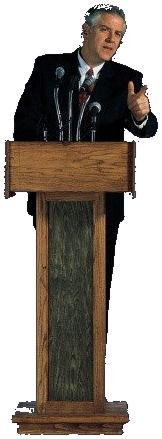
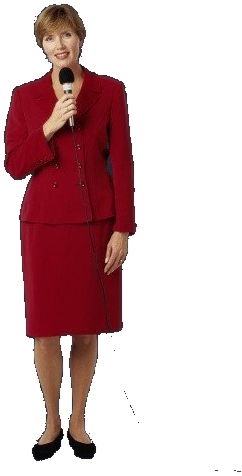
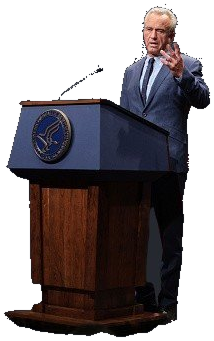
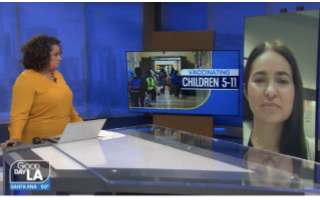
While using this platform to call attention to the AAP's historic mission — with Dr. Grulee as its face — seems like a can't-miss, nothing is a can't-miss in healthcare advertising. Here are four ways to bring this idea to life; each with its own charm.
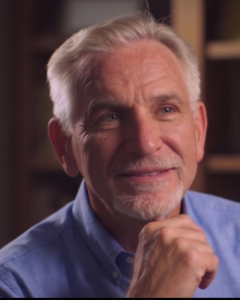
Named in honor of Dr. Clifford Grulee, a founding member of the AAP, this direction honors and continues his mission to be "an advocate for the child" — while reinforcing the historic trust and credibility the AAP has earned over the last century. Dr. Grulee's name and likeness would only be used with the expressed, and hopefully enthusiastic, consent of his estate.
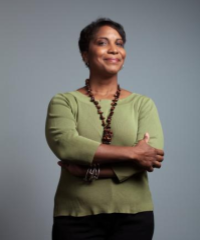
Raise awareness of the AAP's great work by elevating its leadership. Every year, we could refresh the avatar by simply getting a few shots of the incoming president and a voice sample. The leader of the AAP gets to call attention to the good work they do and advance their mission. A simple, repeatable way to elevate leadership and create earned PR opportunities year after year.
To sidestep white coat and similar laws, we could hire an AAP member doctor to become the face and voice of the organization. This becomes especially powerful if that doctor already has an earned media presence — someone like Dr. Katherine Williamson, who is frequently interviewed on local news. A doctor with that kind of platform could amplify the effort and put a spotlight on the pediatric desert problem. Any trusted AAP doctor could fill this role; the media presence is a bonus, not a requirement.
The simplest legal route: an avatar with no medical connotation at all. Cliff acts as a facilitator — making the AAP's resources and healthychildren.org easier to navigate than ever. His guidance carries less clinical authority than a credentialed avatar, but he's still surfacing science-backed research and directing parents to trusted sources. Accessible, warm, and legally uncomplicated.
Multicultural representation isn't an afterthought — it's a launch requirement. A Spanish-speaking avatar would ship at launch; additional voices and faces would be added based on research into the communities that need this most. This is a core part of the initial build, not a future phase.
"Clinical information tells you what the science says. Medical advice tells you what to do about your child specifically. Dr. Cliff does the first. Your pediatrician does the second."
Four distinct federal frameworks govern what this product can do, how the avatar can be presented, and what data it can touch. All four have clear compliance paths.
The CHATBOT Act (H.R. 7985, introduced March 18, 2026) explicitly prohibits AI chatbots from indicating or implying possession of a professional license — including medicine. A "reasonable user" standard applies: even without explicit credential claims, a name like "Dr. Cliff" combined with clinical wardrobe may constitute an implied license claim.
Pennsylvania filed suit against Character.AI on May 1, 2026, alleging it enabled "unlawful practice of medicine and surgery" when AI personas represented themselves as licensed professionals. This is the live enforcement benchmark.
The avatar identity is genuinely unresolved and requires a formal decision before production. Three structural paths exist — each legally distinct.
No path is pre-selected. Each carries distinct legal, logistical, and production implications.
HIPAA applies when an AI system processes Protected Health Information on behalf of a HIPAA-covered entity. If deployed by a healthcare organization, the AI vendor becomes a Business Associate and must execute a BAA. When parents share personal details in conversation, that input may constitute PHI. HIPAA does not automatically apply to a standalone consumer-facing tool — though FTC health data rules fill that gap.
Design out PHI collection: The system prompt instructs the tool not to request identifying information. The product responds to clinical questions, not patient profiles.
Session-only, no-log architecture: Conversations are not stored beyond the session. No conversation history. No training on user inputs. Disclosed to parents explicitly as a deliberate privacy design decision.
If deploying with a healthcare partner: A BAA must be executed before any integration. Anthropic, Azure OpenAI, and Google Cloud Healthcare API all offer BAAs.
The FTC's updated COPPA Rule (effective April 22, 2026) expanded the definition of personal information to include biometric identifiers — voiceprints, facial templates, fingerprints, and genetic data. The conversational experience requires parents to speak to the tool. Eliminating voice input is not an acceptable path.
The user is the parent, not the child: COPPA's biometric protections govern data collected from children under 13. A parent speaking into a microphone is not a child. User interface and onboarding must make the parent-user positioning unambiguous.
The FTC's stream-and-discard exception: The FTC will not enforce parental consent requirements where audio is collected solely to fulfill a request and immediately deleted after transcription. Real-time speech-to-text, audio buffer cleared immediately, transcript used for the RAG query, transcript not retained after session ends. The conversational experience is preserved entirely.
Software becomes an FDA-regulated medical device if it performs autonomous clinical decisions or is intended for the diagnosis, cure, mitigation, treatment, or prevention of disease. If responses are framed as diagnoses rather than information, the product may cross into regulated clinical decision support territory.
Information architecture, not diagnosis architecture: The two-stage RAG retrieves AAP-published guidance — it does not generate clinical judgments. The system prompt prohibits diagnostic language.
Routing toward care is built-in: For condition-specific questions requiring physical examination, the tool triggers the AAP's find-a-pediatrician resource by zip code. This positions the product within FDA's January 2026 low-risk guidance.
Architectural oversight as the honest disclosure: Responses are constrained to AAP clinical content by design. The accurate disclosure is architectural — no implied human reviewer.
As of May 2026, six states have enacted prior authorization AI laws, nearly two dozen have pending chatbot legislation, and Pennsylvania's lawsuit against Character.AI signals aggressive enforcement.
Every U.S. state prohibits the unlicensed practice of medicine. Pennsylvania's May 2026 lawsuit against Character.AI is the clearest enforcement statement yet. State AI chatbot laws are proliferating: Illinois (8/1/25), California SB 243 (1/1/26), Texas (1/1/26). New York SB 7263, imposing civil liability for professional impersonation by AI, has passed committee.
The RAG architecture is the structural defense: The two-stage RAG retrieves exclusively from AAP-sourced clinical content. The tool surfaces peer-reviewed guidance — it does not generate clinical opinions. This is materially different from the AI personas in the Pennsylvania case.
Design to California — the strictest standard: Building to California's requirements provides coverage across all currently enacted state laws.
The companion chatbot distinction: California SB 243 defines a companion chatbot as a system sustaining relationships across multiple interactions addressing social or emotional needs. This product has no conversation memory — it very likely falls outside SB 243's scope entirely.
California AB 489 prohibits AI avatars from using names implying professional licensure and bans clinical attire — white coats, stethoscopes, post-nominal letters. The current placeholder does not comply as presented. Note: AB 489 applies to deployed products, not concept demonstrations.
Path 01 — Licensed physician — resolves this cleanly: "Dr." is an accurate credential, not an implied one.
Path 02 — Grulee — requires a legal opinion: Whether "Dr." with a deceased, currently unlicensed individual constitutes an accurate credential or false implication under AB 489 is not settled.
Path 03 — Plain Cliff — is fully compliant: No title, no clinical wardrobe, no implied licensure.
Wardrobe resolved on all paths: White coats and clinical attire are off the table regardless of which avatar path is chosen.
Association guidelines are not legally binding but directly inform the standard of care in negligence cases and signal where regulated frameworks are heading.
In its April 2026 letter to Congress, the AMA urged four specific safeguards: (1) transparency — clear AI disclosure, no implied licensure; (2) regulatory boundaries — no diagnosing without review; (3) privacy — strict data standards; (4) safety — guardrails preventing AI from discouraging professional care or blocking emergency response.
Transparency: Persistent AI disclosure label throughout every session — not a one-time onboarding acknowledgment.
No diagnosis: The RAG architecture returns AAP clinical content; it does not generate clinical judgments. Architectural, not policy-dependent.
Privacy: No PHI collection; stream-and-discard voice; session-only transcript — addressed in Challenges 02 and 03.
Safety: Three-tier triage architecture in the system prompt. Routing toward professional care is core product behavior, not a fallback.
At the FDA's Digital Health Advisory Committee in November 2025, AAP-aligned experts described pediatric AI as the most serious category. Committee members expressed uncertainty deep enough that they "did not know what to say." Stated risks include misdiagnosis, mistreatment, emotional dependency, and health apps substituting for clinical care.
The AAP is the source: The two-stage RAG retrieves exclusively from AAP-published clinical content. Pinecone metadata preserves source URL, article title, section, and publication date at the chunk level. Per-response citation is technically feasible and should be built in.
Opening character statement: "Everything I know comes from research and guidance published by the American Academy of Pediatrics and HealthyChildren.org." Accurate, character voice, not a disclaimer.
Routing toward care: Condition-specific questions trigger the AAP find-a-pediatrician resource by zip code.
Laws set the minimum. These concerns may not be illegal — but failing them would undermine the trust the product requires to serve its purpose.
Research identifies Therapeutic Misconception as the central ethical risk in health AI: users underestimate limitations and overestimate capability. A warm, conversational avatar actively increases this risk. The APA's November 2025 advisory states AI tools "can simulate human traits but truly lack the ability to handle complex emotional, ethical, and clinical situations."
The tool voices its own limits as character: "I can tell you what the research says — but I can't see your child, and your pediatrician can." A character line, not a legal insert.
Architecture designed against dependency: No conversation memory. No relationship continuity across sessions. Each session is complete in itself.
Single persistent disclosure: One clear, always-visible label covers both AI transparency and clinical scope requirements simultaneously.
The highest-stakes failure mode: a parent describes a genuine emergency and the tool responds with information instead of directing immediately to 911 or the ER. Both an ethical failure and potential negligence exposure regardless of whether other laws are satisfied.
Tier 1 — Hard triggers: "What you're describing sounds like you need to call 911 or get to an ER immediately." No clarifying dialogue. Triggers: difficulty breathing, unresponsiveness, seizure, blue lips, severe bleeding, suspected poisoning.
Tier 2 — Triage gate: On ambiguity only — "Let me ask you — is your child currently sick or hurt, or do you have a question about something that's concerning you about their health?" If yes → provider routing. If no → informational default.
Tier 3 — Informational default: The vast majority of interactions. Warm, AAP-sourced, citation-carrying responses.
The product's stated purpose is to address the pediatric access gap — disproportionately affecting rural, low-income, and non-English-speaking communities. Open questions: does AAP content require culturally adapted guidance; how is accuracy verified across linguistic contexts; does the knowledge base adequately represent health concerns prevalent in the communities the product is designed to serve?
Multicultural avatar design is a product requirement: Multiple avatar options reflecting the demographic diversity of the parent population are planned at scale.
Spanish-language support as the first expansion: 22% of U.S. children live in households where Spanish is the primary language. Knowledge base expansion requires verifying that AAP content in Spanish is clinically equivalent — not simply translated.
Knowledge base equity audit required pre-launch: The AAP content should be audited to ensure it adequately covers health concerns prevalent in communities with the worst access gaps.
Each disclosure addresses a specific legal or ethical requirement identified above. A disclosure that reads like a waiver undermines the trust the product depends on.